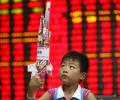
China now world's second largest share market, India is 7th

Chances of a sudden collapse in the Shanghai Composite are remote.

A financial turnaround in Tata Steel and Tata Motors has come as a shot in the arm for Chandra.
After years of losing money on two of the group's biggest bets - global steel business and domestic passenger cars - there are strong signs of a revival in both businesses.

There, however, has been an improvement in operating margins.

Wonder why corporate India is showering dividends?

Total net debt-equity ratio improves for third consecutive year, while investment in new projects hits a 10-year low, says Krishna Kant.
Through the past 12 months, the Bank Nifty has risen 55%
Earnings spread for foreign investors down to 10-year low of 1.1 per cent, from 2 per cent at the beginning of the year and record high of nearly 5 per cent in 2013

ICICI Bank was the top gainer after stable rating for its senior unsecured bonds by S&P Global Ratings.
With mutual funds, promoters turning net-buyers, foreign investors may have to bid up prices to raise holdings.
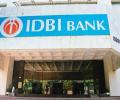
The buyout will cost LIC about Rs 100 billion, based on the Rs 248 billion market capitalisation of IDBI Bank as on Friday, and assuming it acquires a 40 per cent equity stake from the government.


Growth concerns on China, which has already seen the yuan getting devalued twice in August, have rattled global financial markets, including that of India.

The combined assets of the top five - Tata Consultancy Services (TCS), Infosys Technologies, Wipro, HCL Technologies and Tech Mahindra were down one per cent to Rs 27,7400 crore at the end of 2017-18, from Rs 28,0100 crore a year before.
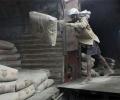
Shree Cement beats ACC in market value, Lupin ahead of Dr Reddy's Labs
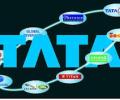
Leverage ratio falls to under 1; but group heavily dependent on TCS & Tata Motors.

Pharma shares extended losses after the government's ban on combination drugs.

Premium valuations era started in 2006 and went hand in hand with decline in the US interest rates

Sales expansion also down 4.4%

Experts say the BSE Sensex could rise to around 32,000 in a year.

Lower IT exports will raise India's dependence on capital flows to fund imports.

Sensex, Nifty put up a good show in closing trade.

Companies in the small-cap universe are having a dream run - the Nifty Smallcap 100 index has shot up more than 25 per cent on a year-to-date basis, even as the benchmark Nifty is up 7 per cent. This is the best start for the index since 2017 when the Nifty Smallcap 100 index surged 32.3 per cent between January 1 and May 10. However, in terms of outperformance to the Nifty, this year's performance is the best in more than a decade. A combination of sectoral tailwinds and lack of institutional selling pressure has helped small companies escape from the correction triggered by the second wave of Covid-19.

Corporate indebtedness is now twice what it was before the global financial crisis; banks' bad loans ratio is 3.5 times higher.

23 Nifty companies reported an annual decline in net profit.

Retail investors usually get caught up in the frenzy of a bull market and burn their fingers in IPOs, warns Tinesh Bhasin.

'The government is encouraging consumption through fiscal spending in a bid to push up economic growth in the face of a slowdown in corporate investment and exports.'

In good times, analysts justify valuations giving interesting investment rationale.

From MRF to Shree Cement: 23 companies which delivered 30% CAGR in 15 years.

IT exporters were the top gainers amid a weak rupee along with select index heavyweights.

If financials and oil sectors were removed, India Inc has done quite well.

The S&P BSE Sensex plunged 301 points to close at 25,490 and the Nifty50 fell 86 points to end at 7,815.

India on track to be third largest consumer economy by 2025.

That resulted in a 50-basis point improvement in operating profit margins on a sequential basis.
Bharti Airtel, HDFC, ONGC, ITC and CIL emerged as the top gainers.

Players like UltraTech Cement more expensive than ITC and HUL; others catching up fast.
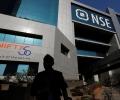
More than 90 per cent stocks in the NSE 500 universe are currently trading above their 200-day moving average (DMA). Experts say this is a sign that the market has become overheated and can lead to a correction or sideways movement for a long period. The 200-DMA is a key technical indicator used by traders to get a sense of market direction. A level, which is roughly a 40-week average, often acts as key support or resistance.

Eight Sensex biggies such as Reliance, L&T, BHEL, SBI and ICICI Bank are among the worst hit.
IT companies account for a third of the entire dividend pot this year
